Books I devoured this week! 📚
Weekly reading reviews ? (and the slightly inconvenient habit of everything turning into autobiography- How very "2010 influencer-chic"...)

This week’s reading list looks, on paper, like a mix of classics, travel writing, academic texts, and one very committed detour into moral discomfort. In practice, it turned into something else entirely: a series of books that kept reflecting each other, and me, in ways I did not particularly ask for.
Lewis Carroll — Through the Looking-Glass (5/5) ⭐⭐⭐⭐⭐
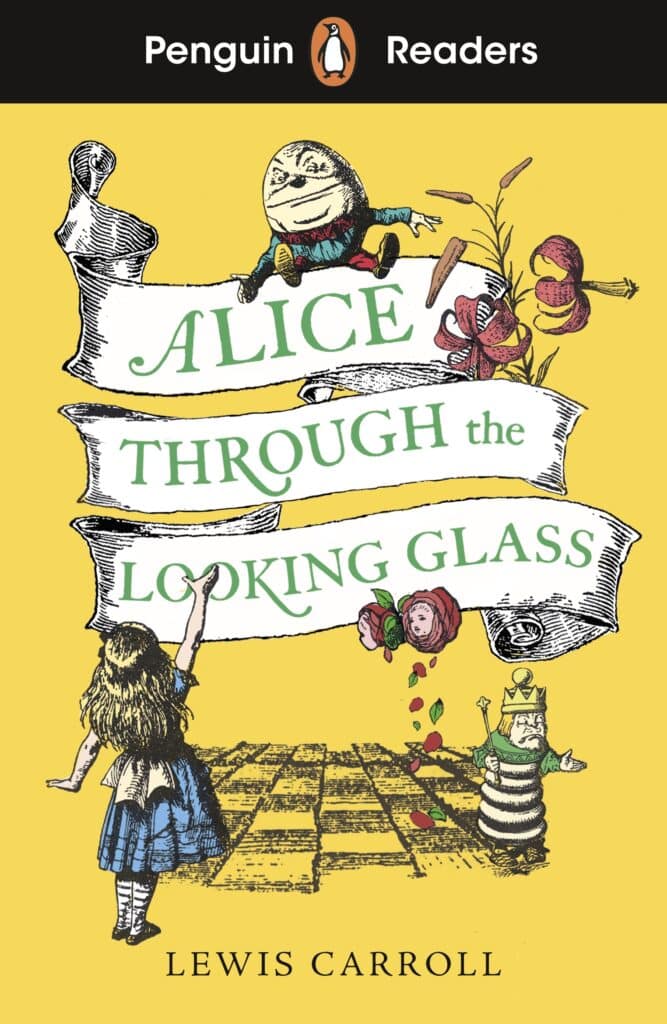
This is the reread that anchored everything else.
I first read Through the Looking-Glass when I was around seven years old. It was the first novel I ever read completely on my own, which already gives it a slightly unfair advantage in my personal hierarchy of books. At that age, I identified with Alice very directly. Not as a character in a story, but as a mode of being in the world: slightly displaced, observant, trying to understand rules that kept changing depending on who was speaking. The entire story takes place 6 months after "Wonderland"- set in summertime, whereas this one, is set in the drawing room, during naptime, in the peak of winter.
The quote that hit me like a freight train:
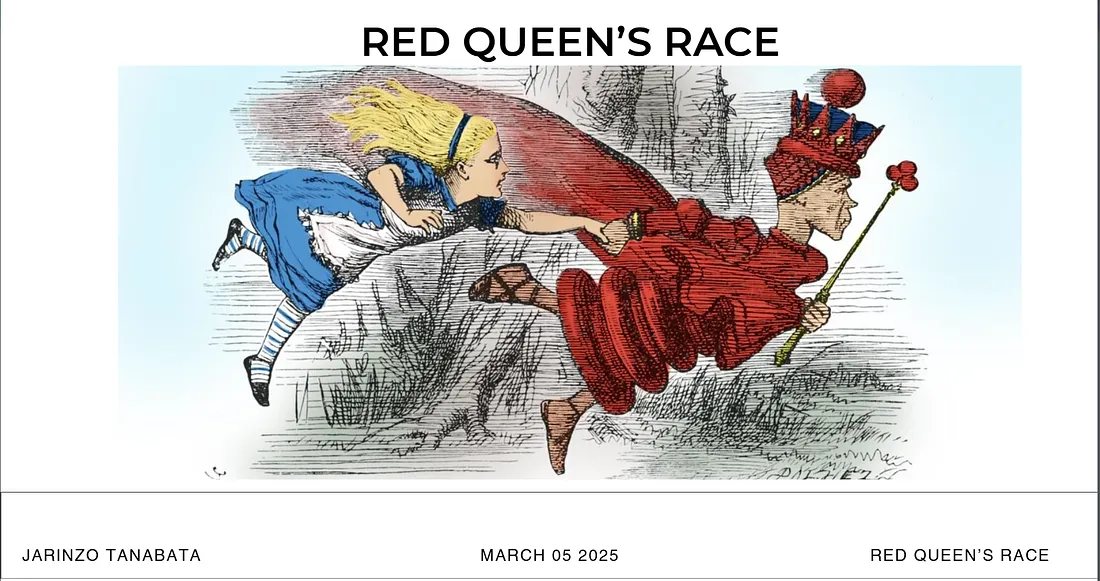
“My dear, here we must run as fast as we can, just to stay in place. And if you wish to go anywhere you must run twice as fast as that.”
― Alice in Wonderland
Of course I am talking about the race of the Red Queen. As a 7 year old, I felt this physically, being unable to run and play the way other children took for granted on account of the fact that my chest felt heavy every time I tried to walk. Running as fast as I could, for as long as I wanted was my dearest wish. It never came true. Doctors are healers, not miracle workers!
As an adult however? I now feel this systemically, feeling stuck within structures that keep us held, and feeling stunted compared to many of my peer group. Indeed most of the people I went to high school with have gotten married, had kids (not that I want kids etc.... But that is not the point) and I am learning to drive. I am also going back into education after things went wrong for so long. Disabled people do not get the luxury of resting, we always need to be on our guard for whatever the rules are set by a ruler that speaks to us and tells us their expectations in order to keep on moving, or just existing. We also recently had an election on the 7th May for the Senedd in Wales. Hearing your community and cohort described as a bargaining chip in politics and your very survival being a matter of debate everytime an election is caused takes its own toll on the human nervous system. We exist within society as part human being, part allegorical cautionary tale, so it seems.
I started life in London, and later moved to mid Wales as a child. That shift mattered more than I understood at the time. My asthma improved somewhat with the change in environment, but it never fully left. It became a permanent background condition rather than an acute event. Later, I would learn as an adult that I also had CVID, which nobody knew about in those early years, but which quietly explained a lot of the “why is everything slightly harder for me than it seems to be for everyone else” experience. I am not sure why all of us with CVID seem to also have asthma...
Revisiting Looking-Glass as an adult, that childhood identification did not disappear. It just became more layered.
The book is built around reflection and inversion, but what it really does is force you to examine how meaning changes depending on perspective. That landed differently this time.
There is a line that still stands out with absolute bluntness:
“If it was, then it would be, but it isn’t, so it ain’t, and that’s logic.”
It is almost aggressively simple. No embellishment. No narrative cushioning. Just fact stated as fact.
As a child, it felt like a clever joke. As an adult, it reads differently. It strips away the human tendency to turn everything into a moral story or hidden lesson. Sometimes things are true or not true. Sometimes things exist or they do not. And that is the end of it.
Sometimes there is no quest, no moral tale, no task, and no reason why things happen. There is no ledger in nature, things just are. Chaos theory! It also ties in with my own personal philosophy, which I revisit often, medically, morally, and as a student of History and Archaeology. "Facts do not care about you feelings". Facts are facts. They are not moral tests.
Which, irritatingly, is often correct.
Then there is Jabberwocky, which continues to behave like linguistic nonsense while somehow communicating emotional reality with unsettling accuracy. Danger, movement, consequence, triumph. None of it is explicitly defined, and yet all of it is understood.
It is a reminder that comprehension does not always require clarity. Sometimes it just requires pattern recognition and instinct.
And that, inconveniently, also tracks quite closely with how life often works.
But the real shift in rereading Looking-Glass was not the logic, or the poetry, or even the structure.
It was the mirror.
Reading it again as an adult created a very specific moment of recognition: I was looking at a text I first encountered as a child, and noticing how my interpretation of it had changed because I had changed. The reflection was no longer just Alice’s problem. It became mine, too.
Not in a dramatic sense. Just in a quiet, slightly unsettling one.
Vladimir Nabokov — Lolita (3/5)
⭐⭐⭐
(YIKES ON BIKES!)

What can ANYONE say about the fever dream that is LOLITA???
This is one of those books that everyone warns you about, and then you read it anyway because curiosity is not always a sensible trait. I can see though, why it is on so many university Syllabi, for literature, for History, and also psychology. It is THAT GOOD... but it is also a literal train wreck, and you will want to put it down... I read this in maybe a full day... A sunny Sunday afternoon...
The writing is, objectively, extraordinary. Controlled, precise, and stylistically brilliant. It is also deeply uncomfortable by design. You are placed inside a narrator’s perspective that is both articulate and morally collapsed, and forced to sit with that contradiction.
The prose is incredible, descriptive, lush in the way that the author, who is also the narrator of the centralized character Humbert Humbert.... (yeah that is his real name.... which is Hilarious in itself... but we move.... ) he speaks to you directly, in 1st person, and sometimes his sardonic humour just takes you along for the ride, and he is charming, glib, funny... everything a narcissist is actually... and you catch yourself laughing with him in real time. The truth is sometimes he HAS A POINT THOUGH. Then you catch yourself laughing with him in real time, the cognitive dissonance catches you TF off-guard and then you realise in real time that you are sharing the same space as a human monster. Scary. Then you're like "What does this say about ME as a human if I am LAUGHING at this? Am *I* a terrible person?" It is like watching that Ted Bundy interview video, for approx 200 pages where the protagonist is also the perp, and is like "I swear your honour, this is all a misunderstanding, ladies and gents of the jury" .
There are moments where the language is so elegant that you almost forget what is being justified. And then you remember. Repeatedly.
The experience is less reading and more sustained cognitive dissonance. You are drawn in by the prose, then repelled by the content, then drawn in again because the writing is that effective.
It is compelling in the way something deeply wrong can still demand attention.
I finished it, but not comfortably, and I do not think comfort was ever part of the contract. I also felt sick a LOT while reading this...
Tales from Around the Globe — A Woman Alone (4/5)
⭐⭐⭐⭐

This is a very different kind of reading experience.
A collection of solo travel narratives by women across different places and contexts, it shifts between inspiring, observational, and occasionally slightly distant depending on the section.
Some of it resonated strongly, particularly the independence and sense of movement through unfamiliar spaces. Other parts felt harder to access, as though they belonged to a different kind of life structure than the one I have experienced.
Which is not a flaw, necessarily. Just a reality of perspective.
It is the sort of book that works best slowly, in pieces, rather than all at once.
Ovid — Metamorphoses (5/5)
⭐⭐⭐⭐⭐

This remains one of my favourite texts, and I do not think that is changing anytime soon.
Mythology is often framed as escapism, but I think that undersells it. It is more like a long archive of human attempts to explain change, loss, desire, and transformation in ways that can be held.
Everything in Metamorphoses is in motion. Nothing stays fixed. People become animals, stars, trees, memories. Identity is never stable, only temporary.
What stayed with me most this time was not any single myth, but the emotional clarity of certain endings. Particularly the quiet brutality of acknowledgement rather than resolution.
That something existed. That something was loved. That it is no longer what it was.
No moral accounting. No corrective ending. Just transformation.
Chris Caple — Conservation Skills (5/5)
⭐⭐⭐⭐⭐
(WOW!)
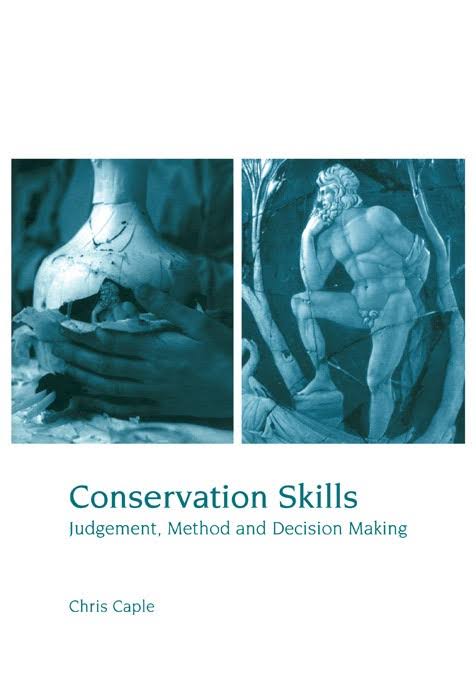
This is technically a textbook, which makes it sound less enjoyable than it actually is.
I want to meet this academic... he seems like he writes like he talks. it flows, it's relatable, you feel guided, not talked down to. I also LOVE personal anecdotes from academics.
What I appreciated most was its structure. It does not attempt to perform intelligence; it explains process. Step by step, methodically, with a clear emphasis on why things are done rather than just how.
That distinction matters more than it should.
I read it cover to cover, which is not something I say lightly about academic texts. But there is something satisfying about material that respects your curiosity enough to answer it properly.
It aligns with a very consistent thread in how I think: I have always preferred “why?” over anything else.
Which brings me neatly back to childhood again.
Alice With a Why — (in progress)
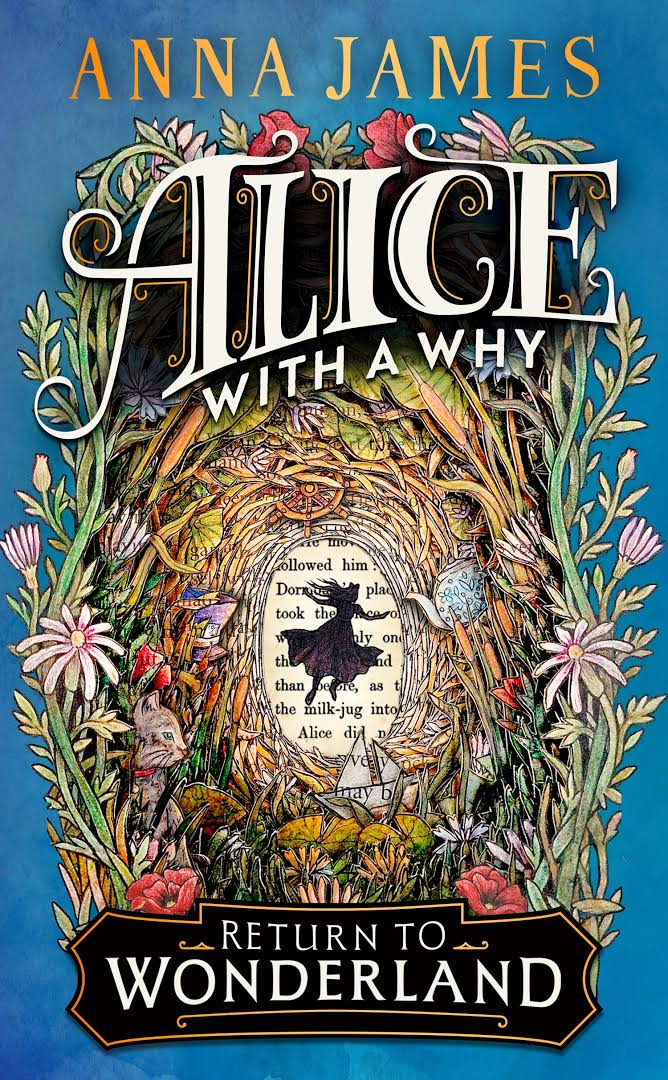
I have just started this, and I already know I am going to end up writing about it here once I finish.
I saw it in Waterstones first: a display for a new release titled Alice With a Why. That alone felt slightly too aligned with my own internal preoccupation to ignore.
Because “why?” has always been my favourite word. Not in a philosophical branding sense, but in a very literal, slightly relentless way. Why things happen. Why systems behave as they do. Why rules exist. Why they change.
And in Looking-Glass, that question was always there, even when it was not explicitly asked.
Closing thread (because apparently everything connects whether I ask it to or not)
Looking back across this week’s reading, there is a pattern that is difficult to ignore.
Alice gives reflection and inversion.
Jabberwocky gives meaning without clarity.
Nabokov gives clarity that destabilises meaning.
Ovid gives transformation as constant truth.
Travel writing gives fragmented lived experience.
Academic conservation gives structure, process, and explanation.
And all of it circles the same underlying question: how do we understand reality when it refuses to be neatly explained?
Returning to Looking-Glass as an adult made that question feel less theoretical.
I was 7 when I first read it, nearly 8 when I finished. I am not smol now. I grew up, moved from London to Wales, learned how to live with a body that did not always cooperate, and later found out there were medical reasons behind things I had never been given language for at the time. In many ways I am still learning this. If anything.
And yet I still identify with Alice.
That part did not change.
The reflection just became more detailed.
And now I am reading Alice With a Why, which feels like the story has decided to ask the question out loud this time.
I will, inevitably, report back.
With My Heart-
Clare Alexandra


Comments
Post a Comment